Before the outbreak of WWII, Germany was looking for new dive bombers and ground-attack aircraft designs. Two brothers, Ulrich and Wolfgang Hütter, who were glider designers, tried to meet the RLM's design specifications. Airframe strength was stressed, and the aircraft should have the flight performance of fighters of that time. Two proposals were submitted by the Hütter brothers.
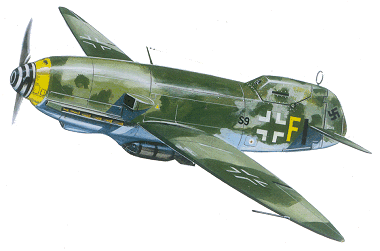
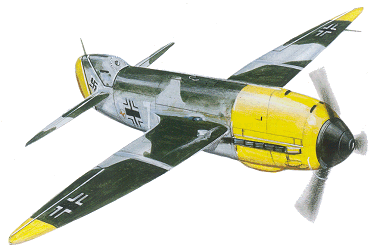
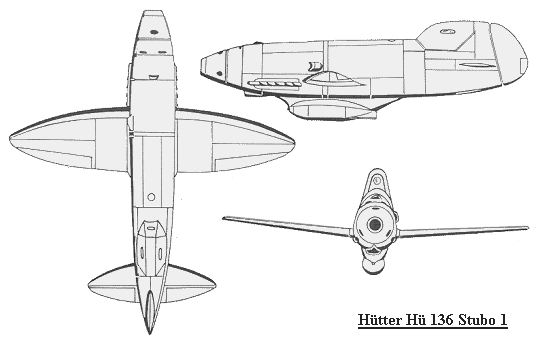 The first design - Stubo 1 (short for
Sturzbomber or dive-bomber) - was to be heavily armored. The
wings were set low and were of an eliptical planform. A single 1200 horsepower
Daimler-Benz DB 601 in-line engine provided the power The cockpit was
set at the rear of the fuselage and the pilot only had small slits to see
through. The single fin and rudder was blended into the rear fuselage/cockpit
area. To help save weight and thus increase range, a conventional landing
gear arrangement was dispensed with; instead, take off was accomplished
with a trolly that could be jettisoned upon take off. Landing was
to be on a belly skid after the propeller was blown off and lowered by parachute
for recovery and later reuse. A single 500 kg (1102 lb) bomb could be carried
externally beneath the fuselage in a fairing that could be dropped, and
was also to be armed with several machine guns.
The first design - Stubo 1 (short for
Sturzbomber or dive-bomber) - was to be heavily armored. The
wings were set low and were of an eliptical planform. A single 1200 horsepower
Daimler-Benz DB 601 in-line engine provided the power The cockpit was
set at the rear of the fuselage and the pilot only had small slits to see
through. The single fin and rudder was blended into the rear fuselage/cockpit
area. To help save weight and thus increase range, a conventional landing
gear arrangement was dispensed with; instead, take off was accomplished
with a trolly that could be jettisoned upon take off. Landing was
to be on a belly skid after the propeller was blown off and lowered by parachute
for recovery and later reuse. A single 500 kg (1102 lb) bomb could be carried
externally beneath the fuselage in a fairing that could be dropped, and
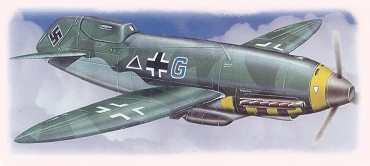
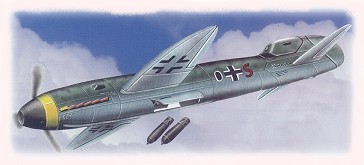
was also to be armed with several machine guns.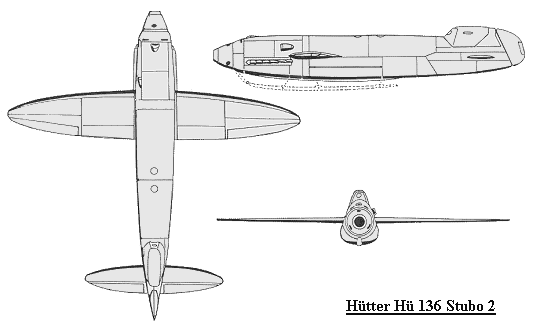 The second design - Stubo 2 (short for
Sturzbomber or dive-bomber) - was also to be heavily armored
and was similar to the Hütter Hü 136 (Stubo 1). The fuselage
was lengthened on the Stubo 2 to accommodate the internal bomb bay which
could hold a 1000 kg (2205 lb) bomb load. The same engine was used - a
single 1200 horsepower Daimler-Benz DB 601 in-line engine - and take off
and landing was similar to the Stubo 1.
The second design - Stubo 2 (short for
Sturzbomber or dive-bomber) - was also to be heavily armored
and was similar to the Hütter Hü 136 (Stubo 1). The fuselage
was lengthened on the Stubo 2 to accommodate the internal bomb bay which
could hold a 1000 kg (2205 lb) bomb load. The same engine was used - a
single 1200 horsepower Daimler-Benz DB 601 in-line engine - and take off
and landing was similar to the Stubo 1.These two projects envisioned by the Hütter Brothers did not quite reach the design specifications that the RLM set down. Along with potential problems arising from the landing procedure and the very limited vision from the cockpit, plus the fact that more conventional aircraft were being designed and built that could do the job as well if not better, these designs were not picked up for a development contract.
Hütter Hü 136 (Stubo 1) Data
| Span | Length | Loaded Weight |
Max Speed | Range |
Service Ceiling |
| 6.5 m 21' 4" |
7.2 m 23' 8" |
3700 kg 8157 lb |
560 km/h 348 mph |
2000 km 1242 miles |
9500 m 31170' |
| Hütter Hü 136 Stubo 1 & 2 Models |
| There are no models of the Hütter Hü 136 (Stubo 1 or 2) available at the present time |
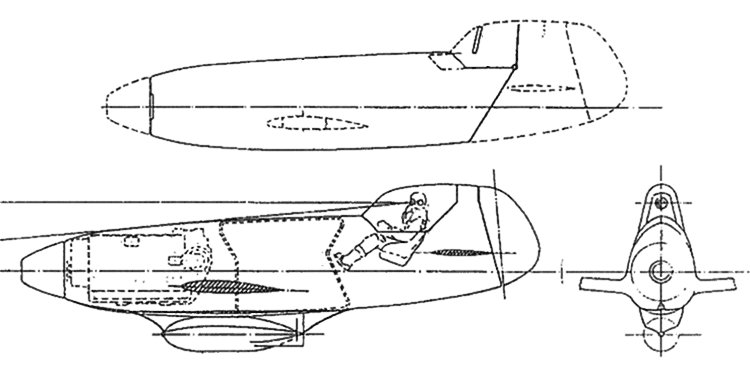
Hütter Hü 136 (Stubo 1) -
note the lines drawn to indicate the pilot's vision range
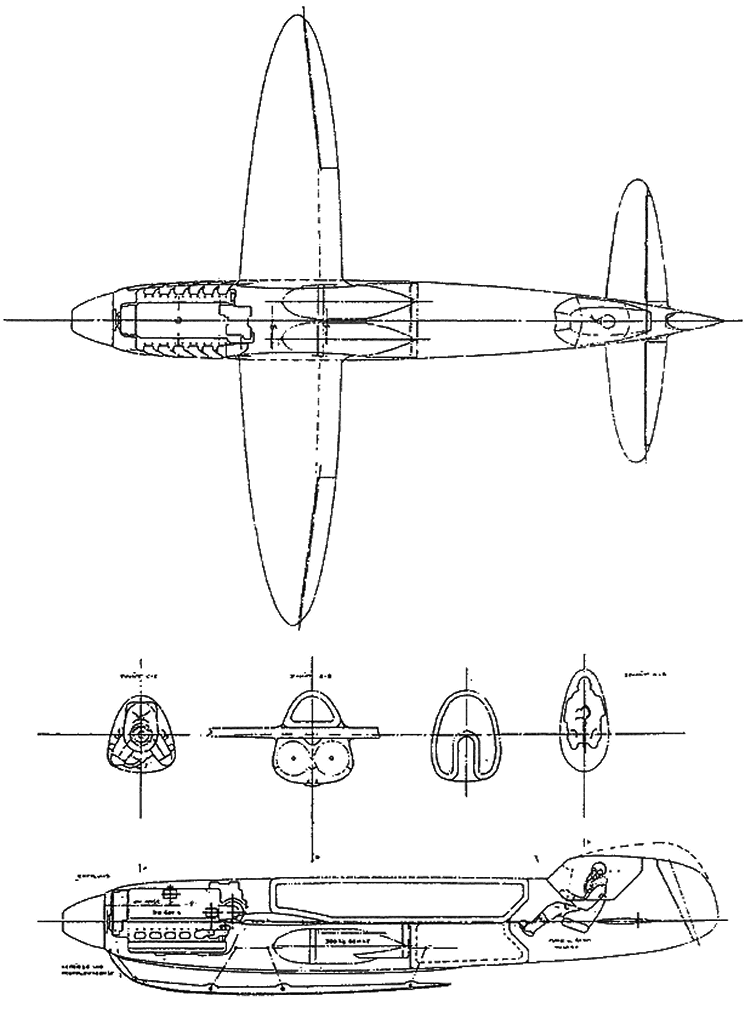
Hütter Hü 136 (Stubo 2) - showing cross section views and component placement
| Hütter
Hü 136 (Stubo 1) |
|
|
|
| Hütter
Hü 136 (Stubo 2) |
|
|
|
Above images from:
Top - Luftwaffe Secret Projects: Ground Attack and Special Purpose Aircraft
Bottom - Die Luftwaffe: Projekte der Deutschen Luftrüstung